



How to Build the Perfect Silver Bracelet Stack in 2026: The Pakistani Woman's Complete Guide
A silver bracelet stack means wearing two or more bracelets on the same wrist - layered intentionally to create a look that feels curated, personal, and complete. The difference between a stack that looks styled and one that looks cluttered comes down to three things: the right combination of textures, the right number of pieces, and understanding which outfit contexts call for which approach.
No Pakistani jewelry brand has written a proper bracelet stacking guide for a local audience. The results ranking for this topic are all Indian or global brands writing for a generic audience. This guide is written specifically for Pakistani women - covering how to stack with shalwar kameez, how to layer for Eid and weddings, how to build a starter stack from scratch using genuine 925 sterling silver, and which pieces from Zumorrud's collection work best together.
Why Bracelet Stacking Works Better with Silver Than Any Other Metal
Before getting into technique, it is worth understanding why silver is the ideal metal for building a bracelet stack - particularly in Pakistan's climate and fashion context.
Silver is lightweight. Stacking three to five bracelets on one wrist adds physical weight. 925 sterling silver is light enough that even a full stack remains comfortable for all-day wear without creating the heavy, clanking feeling that brass or base metal bracelets produce.
Silver maintains visual consistency across pieces. A stack only works when the pieces feel like they belong together. Genuine 925 silver with consistent white gold or rhodium plating maintains the same bright, cool finish across all pieces - so a charm bracelet, a chain bracelet, and a bangle from the same collection look like a deliberate set rather than random pieces thrown together.
Silver complements every Pakistani skin tone. Unlike yellow gold, which suits warm complexions most, silver's cool brightness works equally well on fair, wheatish, and deep skin tones - making it the most universally wearable choice for Pakistani women.
Tarnish-free plated silver stays consistent. A stack where one bracelet has tarnished and another has not looks unintentional and messy. Quality 925 silver with proper plating maintains its finish across all pieces, keeping your stack looking cohesive over time.
The 5 Rules of Silver Bracelet Stacking
Every great bracelet stack follows these five principles - whether the wearer is conscious of them or not.
Rule 1: Anchor, Layer, Accent
Every stack has three types of pieces playing three distinct roles:
The anchor is your most substantial piece - the widest, heaviest, or most visually dominant bracelet. It sets the tone for the entire stack. Everything else is built around it.
The layer is a mid-weight piece that adds depth between the anchor and the accent. A chain bracelet or a simple bangle typically plays this role.
The accent is your lightest, most delicate piece - often a thin chain, a single-charm bracelet, or a minimal band. It adds texture and movement at the edge of the stack without competing with the anchor.
When all three roles are filled, a stack feels complete. When you have two anchors and no accent, it feels heavy. When you have three accents and no anchor, it feels insubstantial.
Rule 2: Vary Texture, Not Just Size
The most common mistake in bracelet stacking is choosing pieces that differ only in width. Two chain bracelets of different sizes placed side by side look like one thick chain rather than a curated pair.
True visual interest comes from texture variation:
-
Smooth vs. textured - a polished chain next to a rope-pattern or hammered bracelet
-
Solid vs. open - a bangle next to a link chain creates a contrast between solid and open forms
-
Embellished vs. plain - a charm bracelet next to a simple band
-
Rigid vs. flexible - a bangle next to a chain bracelet creates movement contrast
You do not need all four types of contrast in one stack. Two is enough to make the stack readable and interesting.
Rule 3: The 3-5 Piece Rule
Three to five bracelets is the sweet spot for a silver bracelet stack. Fewer than three and it does not read as a stack - it just looks like you are wearing a couple of bracelets. More than five and the wrist starts to look crowded, particularly with Pakistani outfits where sleeve embroidery and fabric details compete for visual attention at the wrist.
For everyday wear, three pieces is the ideal number - substantial enough to look intentional, light enough to be comfortable all day.
For Eid and formal occasions, four to five pieces creates the fuller, more festive look appropriate for celebrations.
Rule 4: Keep One Wrist Clean
The most important rule in bracelet stacking is one that most guides skip: stack on one wrist only, and keep the other wrist clean or minimally adorned.
A full stack on both wrists simultaneously looks excessive and draws attention away from your face and outfit. The contrast between a stacked wrist and a bare wrist is what makes the stack look intentional.
If you wear a watch, wear it on the opposite wrist from your stack. This creates natural balance - jewelry on one side, functional accessory on the other.
Rule 5: Match Your Stack Intensity to Your Outfit
A full five-bracelet stack with a casual cotton kameez looks overdressed. A single thin bracelet with a heavily embroidered formal outfit looks underdressed. Your stack should be proportional to the formality and visual weight of what you are wearing.
Casual outfits: Two to three pieces, mix of textures, lighter and more playful designs.
Office and professional: Two pieces maximum, both refined and minimal. A chain bracelet and a slim bangle is the ideal combination.
Semi-formal occasions: Three to four pieces, with at least one piece featuring stones or a distinctive motif.
Eid and formal events: Four to five pieces, with your most significant anchor piece as the focal point.
Step-by-Step: How to Build Your First Silver Bracelet Stack
Step 1: Choose Your Anchor Bracelet
Your anchor is the piece you love most or the one that makes the strongest visual statement. Start here and build everything else around it.
For a charm-led stack: Make the Charm Bar Bracelet your anchor. At PKR 19,200, it is Zumorrud's most customizable piece - a pure 925 sterling silver charm bracelet featuring your choice of charms from six designs: Lemontini (lemon), Cherryliscious (cherry), Sweety (pink heart), Blue Diamond (teardrop), Clover, and Infinity. The combination of charms you choose makes it uniquely yours, and its visual richness makes it a natural anchor for any stack built around it.
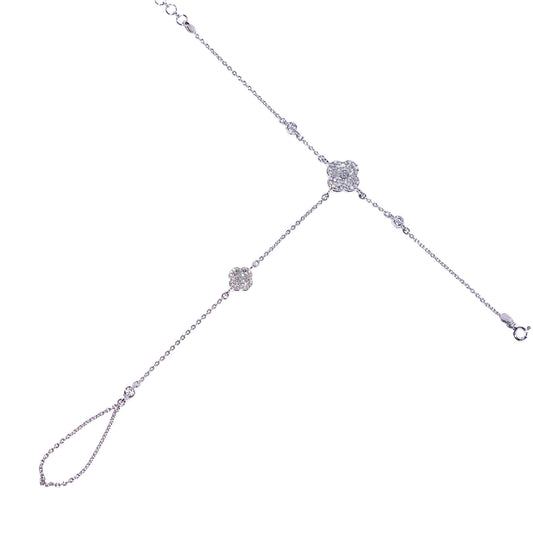
For a floral-led stack: Make the Bloom Bracelet your anchor. Handcrafted in pure 925 silver with sparkling champagne zircons, its floral motif and stone setting give it the visual weight to anchor a full stack.
For a signature-led stack: Make the Tulip Bracelet your anchor. Zumorrud's most recognized piece and best seller - it has earned that status because its design is distinctive enough to anchor a look while refined enough to work across every outfit type. Find it in the silver bracelets collection.
Place your anchor in the center of your wrist - not at the edge closest to your hand or closest to your elbow, but in the middle. This is where the eye naturally falls when looking at a wrist.
Step 2: Add Your Layer Bracelet
Your layer bracelet sits directly beside your anchor - either toward the hand or toward the elbow. It should be thinner and less visually dominant than the anchor, but with enough texture to be noticed as a distinct piece.
A slim chain bracelet in 925 silver works perfectly here. Its open, flexible structure contrasts with a more solid or embellished anchor, and its thinness ensures it does not compete for visual dominance.
If your anchor is a charm bracelet (which has movement and sound), your layer should be a quieter piece - a simple chain or a thin bangle. The contrast between the lively charm bracelet and the still, minimal layer creates a pleasing visual and tactile balance.
Step 3: Add Your Accent Bracelet
Your accent bracelet goes on the outer edge of the stack - the piece closest to your hand or closest to your elbow, depending on which side you placed your layer.
The accent should be the thinnest, lightest piece in the stack. A delicate chain, a thin bangle, or a minimal band all work well. Its role is to frame the stack and add a finishing layer of texture rather than to draw attention itself.
If you are building a three-piece stack, stop here. Step back, hold your wrist at arm's length, and assess whether each piece is readable as a distinct item. If two pieces are blurring together, swap one for something with more textural contrast.
Step 4: Consider a Fourth Piece for Occasions
For Eid, weddings, and formal events, a fourth piece adds the visual fullness appropriate for celebratory dressing. This fourth piece can break the anchor-layer-accent formula slightly - it could be a second chain bracelet of a different width, a small bangle, or a bracelet with colored stones that adds a chromatic element to the otherwise silver-and-white stack.
The Five Petals Bracelet or the Lotus Heart Bracelet work well as fourth pieces - both have enough design distinctiveness to add something new to the stack without disrupting the overall coherence.
Step 5: Edit Before You Leave the House
Once you have assembled your full stack, do one final check:
-
Can you identify each bracelet as a separate piece, or are any two blurring together?
-
Is there one piece that clearly reads as the anchor, or are multiple pieces competing equally for attention?
-
Does the total weight feel comfortable for the duration of your event?
-
Does the stack feel proportional to the formality of your outfit?
If the answer to any of these is no, remove one piece. A three-bracelet stack that works is always better than a five-bracelet stack that does not.
Complete Stack Combinations for Every Pakistani Occasion
The Everyday Starter Stack (3 pieces)
Best for: University, casual outings, daily wear, informal social occasions.
How to build it:
-
Anchor: Tulip Bracelet (Zumorrud's signature piece - distinctive enough to anchor a casual stack)
-
Layer: A slim silver chain bracelet in 925 silver
-
Accent: A thin plain band or minimal bangle
Why it works: The Tulip Bracelet has enough design character to read as the focal piece even in a minimal three-bracelet stack. The chain and band layers add visual depth without adding visual noise. The total weight is light enough for all-day comfort.
Outfit pairing: Casual cotton shalwar kameez in any color, jeans and a kurta, western casual. The silver reads as polished without being overdressed for a casual context.
The Charm Stack (3-4 pieces)
Best for: Weekend wear, informal gatherings, gifting occasion outfits, women who want jewelry with personality.
How to build it:
-
Anchor: Charm Bar Bracelet with your chosen combination of 6 charms - the visual richness and movement of the charms makes this the natural anchor
-
Layer: A simple silver chain bracelet - the plain chain creates visual breathing room between the charm bracelet and the accent
-
Accent: A thin 925 silver bangle worn loosely so it moves slightly against the chain, adding a soft sound element
-
Optional fourth: The Bloom Bracelet if you want to add a floral, stone-set element for a semi-formal occasion
Why it works: The Charm Bar Bracelet is inherently the most visually complex piece in any stack - its multiple charms create movement, sound, and individual visual interest. Surrounding it with quieter pieces lets the charms do the work. The optional Bloom Bracelet adds a stone-set sparkle element that elevates the stack for occasions without overwhelming the charm bracelet's character.
Outfit pairing: Casual to semi-formal. Works with printed and embroidered shalwar kameez, western casual, and informal event outfits. The charm bracelet's playful energy suits relaxed dressing better than very formal wear.
The Eid Statement Stack (4-5 pieces)
Best for: Eid ul Fitr, Eid ul Adha, family celebrations, formal dinners, festive occasions.
How to build it:
-
Anchor: Bloom Bracelet in gold plating - the champagne zircons and floral motif create the festive, occasion-appropriate visual weight needed for Eid dressing
-
Layer 1: Tulip Bracelet - Zumorrud's signature piece adds a second design-led element to the stack
-
Layer 2: A slim 925 silver chain bracelet for visual breathing room between the two design pieces
-
Accent: A thin bangle in silver or gold plating to frame the outer edge of the stack
-
Optional fifth: The Lotus Heart Bracelet if you want to add a symbolic element with personal meaning
Why it works: Two design-led pieces (Bloom and Tulip) as the visual core of the stack creates the richness appropriate for Eid. The chain and bangle layers provide structure and spacing. The total visual weight is substantial without being excessive - the bracelets complement rather than compete with formal outfit embroidery.
Outfit pairing: Formal embroidered shalwar kameez, gharara, lehenga. The gold-plated Bloom Bracelet echoes gold-thread embroidery beautifully. For silver-thread embroidery, use the silver plating version of the Bloom Bracelet.
The Office Stack (2 pieces)
Best for: Professional environments, corporate settings, formal meetings, office wear.
How to build it:
-
Anchor: A slim 925 silver chain bracelet - refined, minimal, professional
-
Accent: The Tulip Bracelet or a thin bangle - adds one design element without creating visual noise
Why it works: Two pieces is the maximum for professional settings. The goal is polished rather than styled. A chain bracelet and one design-led piece creates a look that reads as put-together without drawing attention away from your professional presence.
Outfit pairing: Formal trousers and blouse, structured shalwar kameez in solid or minimal-print fabrics, western office wear.
The Wedding Guest Stack (4 pieces)
Best for: Attending weddings as a guest, mehndi events, formal engagement parties.
How to build it:
-
Anchor: Charm Bar Bracelet with the Infinity and Blue Diamond charms as the focal elements - the symbolic charms suit a wedding context
-
Layer: Bloom Bracelet - its floral motif and stone setting add formal visual weight
-
Layer 2: A slim chain bracelet for spacing
-
Accent: A thin bangle to frame the outer edge
Why it works: The combination of the charm bracelet's personality and the Bloom Bracelet's formal sparkle creates a stack that feels both personal and occasion-appropriate. The total of four pieces provides the visual fullness expected at a wedding without being excessive.
Outfit pairing: Formal Pakistani wear in any color. The silver and stone combination works with both light and dark formal fabrics.
How to Stack Bracelets with Pakistani Outfits: A Specific Guide
This is the section that no global competitor covers - and it is the most practically useful part of this entire guide for Pakistani women, because the outfit context in Pakistan is fundamentally different from what Indian or western jewelry guides assume.
With Casual Cotton Shalwar Kameez
Casual daily shalwar kameez - the kind worn for university, errands, family visits, and informal outings - has a relaxed visual weight that pairs best with a light, playful stack.
Ideal stack: Two to three pieces. A charm bracelet as the anchor, one slim chain as the layer. Keep it loose and casual in its energy.
What to avoid: Heavy bangles or multiple stone-set bracelets with casual kameez. The formality mismatch reads as trying too hard. Save your Bloom Bracelet and statement pieces for occasions that warrant them.
Sleeve consideration: If your kameez has a fitted or three-quarter sleeve, the bracelet stack sits at the wrist and is fully visible - this is the ideal situation. If your kameez has a full sleeve with embroidered cuffs, consider wearing just one or two pieces so the bracelet does not compete with the cuff embroidery.
Color pairing: Silver works with every color in the Pakistani casual kameez palette. For bright colors - fuchsia, emerald, royal blue - a silver stack with white CZ stones creates a clean contrast. For earthy and muted tones - mustard, olive, terracotta - the cool brightness of silver adds a refreshing lift.
With Formal Embroidered Shalwar Kameez
Formal Pakistani shalwar kameez - heavily embroidered in gota, zardozi, or thread work - already has significant visual weight at the neckline, cuffs, and hem. Your bracelet stack needs to complement this without competing.
Ideal stack: Three to four pieces. The Bloom Bracelet or Tulip Bracelet as the anchor, supported by one or two thinner pieces. Choose bracelets whose design language echoes the embroidery style of the outfit.
The embroidery rule: Match your bracelet's visual language to your outfit's embroidery type:
-
Silver-thread zardozi embroidery - white gold-plated 925 silver bracelets are a perfect match. The cool silver tone echoes the silver embroidery thread directly.
-
Gold-thread gota embroidery - the gold-plated version of the Bloom Bracelet bridges silver and gold, making it the ideal choice when your outfit has gold embroidery but you prefer silver jewelry overall.
-
Colorful thread embroidery - plain silver bracelets without colored stones let the embroidery colors take center stage. Avoid bracelets with colored gemstones that clash with the embroidery palette.
Sleeve consideration: Formal shalwar kameez typically has a three-quarter or full sleeve with embroidered cuffs. If the cuffs are heavily embroidered, wear your stack higher on the wrist so it sits above the embroidery rather than on top of it. If the cuffs are minimal, the stack can sit at the natural wrist position.
With Gharara and Lehenga
Gharara and lehenga are the most formal garments in Pakistani women's wardrobes - worn for weddings, barat, and the most significant celebrations. The jewelry approach here is different from all other outfit types.
The rule for bridal and near-bridal dressing: Your wrist jewelry should be substantial enough to be visible in photographs but should not compete with choker necklaces, maang tikka, jhumkas, or other statement pieces being worn simultaneously.
Ideal stack: Four to five pieces, but chosen for visual coherence rather than variety. A matched set - for example, the Bloom Bracelet with the Bloom Earrings and Bloom Pendant from the same collection - creates a more polished, intentional look than mixing unrelated pieces.
What to avoid: Charm bracelets with novelty charms (lemon, cherry) feel tonally mismatched with the gravitas of a gharara or lehenga. Save the Charm Bar Bracelet for casual and semi-formal contexts. For the most formal occasions, choose bracelets with stones - the Bloom Bracelet with its champagne zircons, or the Five Petals Bracelet - over plain chain bracelets.
Gold vs. silver for formal wear: If your lehenga or gharara has predominantly gold embroidery, consider the gold-plated version of your chosen bracelet. If the embroidery is silver or mixed, white gold-plated 925 silver is the correct choice.
With Western Casual (Jeans, Tops, Dresses)
Western casual wear gives you the most creative freedom for bracelet stacking because the outfit itself imposes fewer constraints. There is no embroidery to match, no traditional aesthetic to respect, and no formality register to calibrate against.
Ideal stack: Two to five pieces depending on mood. This is where you can experiment most freely with the anchor-layer-accent formula.
The charm bracelet opportunity: The Charm Bar Bracelet looks most at home with western casual wear. Its playful, customizable character suits the relaxed, individual energy of jeans-and-top dressing in a way that very traditional or formal pieces do not.
Mixing metals: Western casual is the context where mixing silver and gold-plated pieces works best. A white gold-plated chain bracelet next to a yellow gold-plated Bloom Bracelet creates a contemporary mixed-metal stack that reads as fashion-forward and intentional. The 70/30 rule applies - 70% silver pieces, 30% gold-plated accent - to keep the stack coherent rather than chaotic.
Sleeve consideration: With western tops and dresses, your wrists are typically fully visible - no sleeve competition. This means you can wear your stack exactly as intended without adjusting for cuff embroidery or sleeve length.
With Office and Professional Wear
Pakistani office culture varies significantly between industries. A creative agency, a corporate bank, and a government office each have different implicit dress codes. But across all professional contexts, the principle is the same: your jewelry should be present but not distracting.
Ideal stack: Two pieces maximum. A slim 925 silver chain bracelet plus one design-led piece such as the Tulip Bracelet. The chain provides the layered look; the Tulip Bracelet provides the personality. Together they read as polished and intentional without being excessive.
What to avoid in professional settings:
-
Charm bracelets that make sound when you type or gesture - the noise is distracting in meetings and open-plan offices
-
Multiple stone-set bracelets that catch light and draw attention during presentations
-
More than three pieces in any formal professional context
The watch question: Many Pakistani professional women wear a watch daily. If you wear a watch, put it on the opposite wrist from your bracelet stack. This distributes the accessory weight evenly and prevents the watch from visually competing with your bracelets.
How to Care for a Silver Bracelet Stack
A bracelet stack takes more wear than almost any other jewelry category - constant movement, contact with skin, exposure to perfume and hand cream, and daily removal and replacement. Proper care keeps every piece in your stack looking as good as the day you bought it.
Daily habits that protect your stack:
-
Put bracelets on after applying perfume, hand cream, and sunscreen - not before. Chemicals in these products accelerate tarnishing on silver and can cloud CZ stones over time.
-
Remove your stack before washing hands, showering, or swimming. Water itself does not damage 925 silver, but soap, chlorine, and salt water accelerate tarnishing significantly.
-
Remove your stack before sleeping. The friction of bracelets moving against each other and against bedding during sleep causes microscopic scratching over time.
Weekly maintenance:
-
Once a week, wipe each bracelet individually with a dry microfibre cloth. Pay particular attention to the points where bracelets sit against each other - moisture and product residue collect at contact points and cause localized tarnishing if left uncleaned.
-
For charm bracelets, use a soft dry toothbrush to clean around the charm settings and chain links where product residue accumulates.
Storage:
-
Store each bracelet separately in a soft pouch or individual compartment of a jewelry box. Bracelets stored together scratch each other over time, particularly chain bracelets whose links can catch on charm details or stone settings.
-
Zumorrud includes a travel pouch with every purchase - use it. An airtight pouch slows the tarnishing process significantly by limiting the bracelet's exposure to air.
For a full guide on cleaning and maintaining 925 sterling silver, read how to clean and care for silver jewelry.
Silver Bracelet Prices in Pakistan: What to Expect (2026)
Understanding price ranges helps you identify genuine 925 silver from plated alternatives before you buy.
|
Bracelet Type |
Genuine 925 Silver (PKR) |
Red Flag Price |
|
Simple chain bracelet |
12,000 - 16,000 |
Below 4,000 |
|
Floral / motif bracelet |
14,000 - 20,000 |
Below 5,000 |
|
Charm bracelet (6 charms) |
18,000 - 22,000 |
Below 6,000 |
|
Tennis bracelet |
15,000 - 22,000 |
Below 5,000 |
|
Bangle (single) |
10,000 - 18,000 |
Below 3,000 |
|
Pearl combination |
14,000 - 20,000 |
Below 5,000 |
The counterfeit problem in Pakistan's bracelet market: Silver-plated brass bracelets are sold as "pure silver" or "925 chandi" at prices well below the genuine article. A plated bracelet at PKR 2,000-4,000 will lose its finish within weeks of regular wear, leaving a brassy or discolored base metal visible underneath.
Genuine handcrafted 925 sterling silver has a material cost, skilled labor cost, and quality control overhead that makes pricing below PKR 10,000 for a well-made bracelet commercially impossible for an authentic piece.
Always ask for the 925 hallmark. Genuine silver will have it stamped on the clasp or inner surface. If the seller cannot show you the stamp, treat the piece as unverified.
Browse Zumorrud's full range of verified 925 sterling silver bracelets - priced from PKR 14,000 to PKR 22,000 - in the silver bracelets collection.
TRENDING PRODUCTS